Table of Contents
How Regulated Medical Device Fulfillment Works for Medical OEMs in 2026
Understanding how medical device fulfillment works is important because most medical devices distributed in the U.S. must comply with FDA Unique Device Identification (UDI)1 requirements, making accurate inventory control and traceability a key part of the fulfillment process.
Medical device fulfillment is a service where a contract manufacturing partner provides regulated warehouse inventory services to receive, store, manage, and ship medical devices on behalf of a medical OEM. Inventory is maintained in a clean warehouse environment with documented inventory control, traceability, and quality procedures. As orders are received, products are prepared and shipped to healthcare providers, distributors, or other approved destinations while supporting FDA QMSR and ISO 13485 requirements.
The following sections will discuss how medical device fulfillment works in 2026 and how it can benefit medical companies under strict quality guidelines.
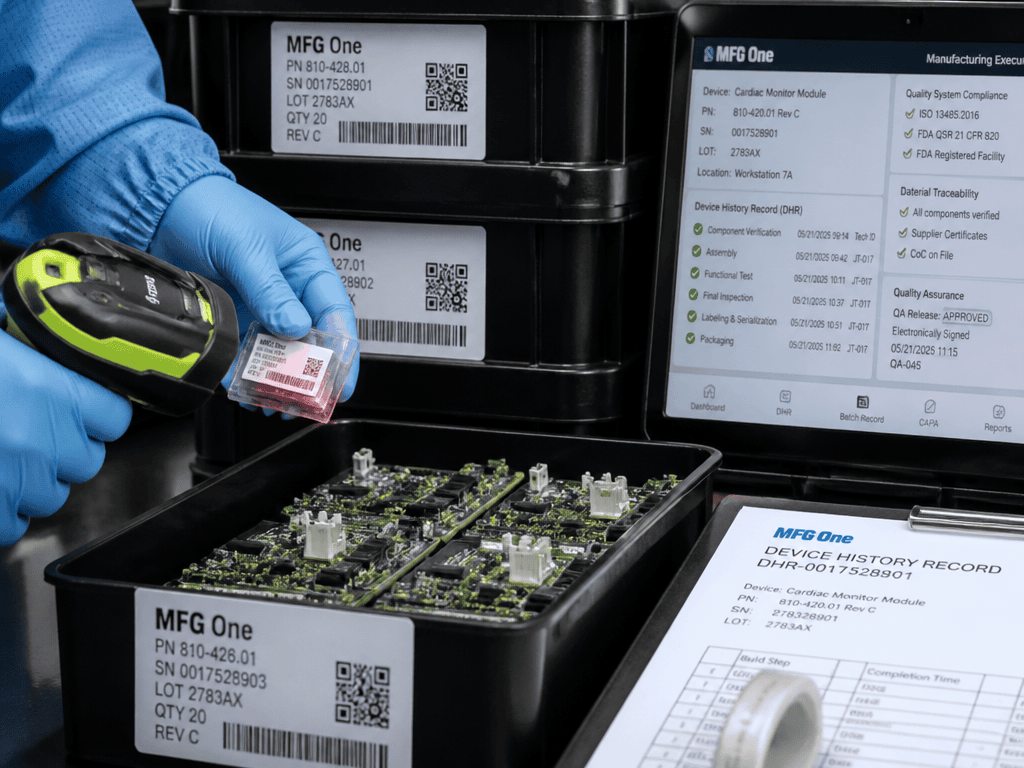
One example of how medical device fulfillment works is preparing finished medical devices for packaging and distribution in a clean, organized fulfillment environment. Controlled packaging processes help protect products before shipment.
Medical Device Warehousing and Fulfillment Process
The medical device fulfillment process begins when a customer order is received and verified. Throughout fulfillment, the medical device OEM remains the primary customer contact while the contract manufacturing company partner manages inventory, quality activities, traceability, and regulated distribution. This coordinated workflow supports ISO 13485 quality management systems and FDA QMSR requirements throughout fulfillment.
The fulfillment process typically includes:
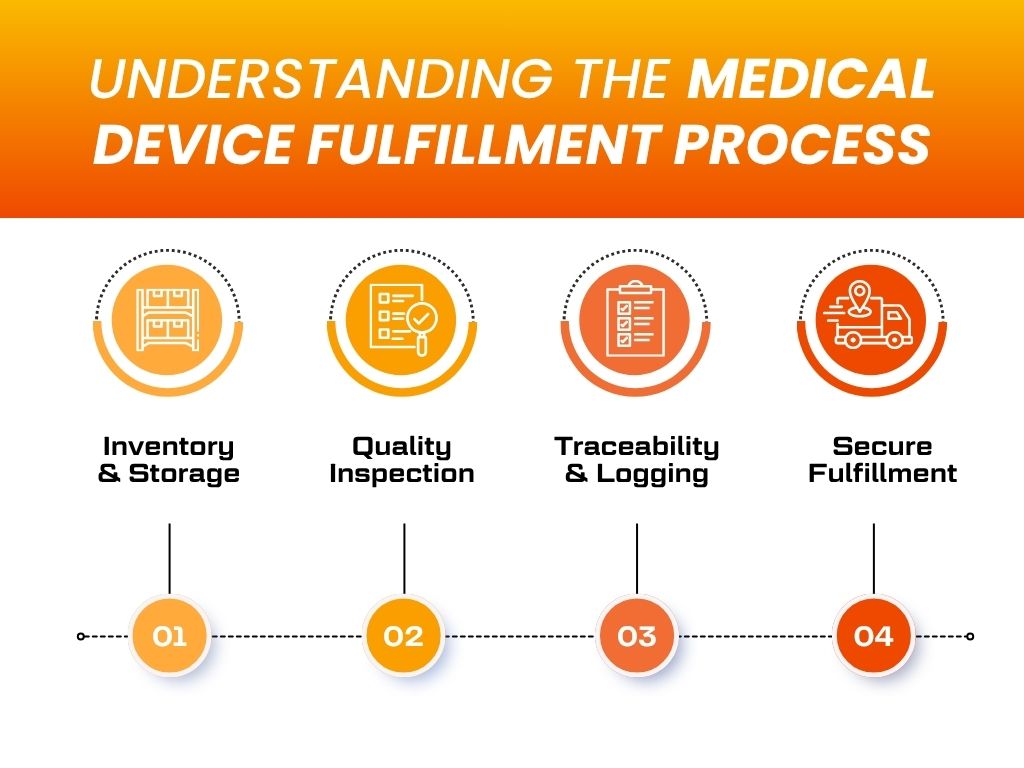
Order Verification
Confirm the customer order, product configuration, inventory availability, and shipping requirements before fulfillment begins.
Quality Release
Verify that finished devices have completed required quality reviews and are approved for distribution.
DHR & Traceability
Record lot and serial numbers, complete Device History Record (DHR) documentation, and maintain product traceability throughout fulfillment.
Validated Fulfillment
Package, verify, and prepare finished medical devices for shipment using documented fulfillment procedures.
Contract manufacturing accounted for 55.1% of the medical device outsourcing market in the last year, reflecting OEM demand for specialized electronic contract manufacturers, cleanroom assembly, packaging, and integrated production services.

A fulfillment specialist scans serialized medical devices in their packaging within a regulated warehouse environment. The barcode verification process supports inventory accuracy, lot traceability, and documented quality controls before quality release shipment.
Benefits of Working With a Medical Manufacturing and Regulated Fulfillment Partner
Moving your production to a third-party FDA-registered facility allows you to consolidate logistics and keep full control over your supply chain.
Understanding how medical device fulfillment works begins with choosing a partner that aligns with product lifecycle support services and strict FDA QMSR requirements:
- Documented Procedures: The third-party FDA-regulated facility maintains rigorous written protocols for critical quality activities like training, CAPA, verification, and traceability.
- Lot and Serialized Tracking: Each phase of the medical build is logged with exact numbers, so you know which component batches are inside your device.
- Quality Release Controls: Units undergo rigorous verification, validation, and acceptance testing, followed by formal release approval, prior to distribution.
- Supplier Qualification and Incoming Inspection: Partner vets vendor credentials and performs critical material verification against defined specifications prior to assembly.
- Clear Updates: You get direct answers about production timelines to minimize unexpected delays.
A professional partner who knows how medical device fulfillment works acts as an extension of your own team, bringing the experience, quality systems, and regulatory knowledge needed to help protect your brand’s reputation and product quality. With inventory maintained for timely order fulfillment, medical OEMs can better manage inventory levels and reduce the costs associated with carrying excess stock.
The Role of Digital Integration in Medical Fulfillment Efficiency
An important part of understanding how regulated medical device fulfillment works is knowing how to keep your records synchronized with the contract manufacturing partner. When integrated, digital systems can improve inventory visibility, support traceability, and reduce manual data entry throughout the fulfillment process.
Connecting a medical brand to the production floor may include capabilities such as:
- Integrated materials and logistics systems can provide visibility into inventory status, material availability, and shipment progress.
- Shipping notifications and tracking information can be shared electronically once orders are processed and released for shipment.
- Use of application programming interfaces (APIs) reduce manual data entry between compatible business systems.
- Shared dashboards or reporting tools helps monitor inventory status, fulfillment progress, and completed shipments.
Shared electronic systems help medical device OEMs better understand how medical device fulfillment works by improving inventory visibility, traceability, and communication with their manufacturing partner.
Is a Medical Device Fulfillment Model Suitable for Regulated Devices?
Whether a medical device fulfillment model is suitable for regulated devices depends on the quality systems supporting the process. Understanding how medical device fulfillment works requires documented procedures for inventory control, traceability, validated packaging, fulfillment services, and regulatory compliance throughout the product lifecycle.
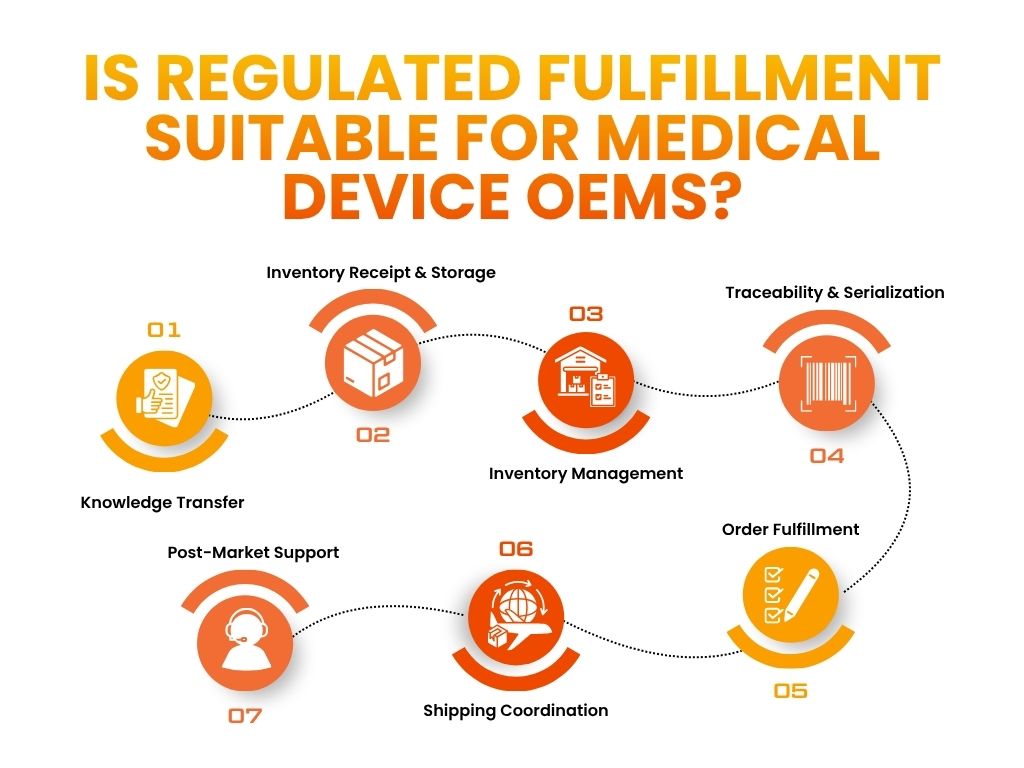
At MFG One, the fulfillment process follows these quality-focused phases:
Phase 1: Knowledge Transfer
Aligning technical specifications and quality management system requirements.
Phase 2: Inventory Receipt & Storage
Receiving and staging medical components in controlled, compliant environments.
Phase 3: Inventory Management
Optimizing stock levels with full visibility and regulatory adherence.
Phase 4: Production Support & DHR Documentation
Capture production records, Device History Record (DHR) documentation, and serialization.
Phase 5: Quality Release & Order Fulfillment
Complete final inspection and quality release before processing customer orders.
Phase 6: Validated Shipping
Prepare, verify, and ship medical devices using documented fulfillment procedures.
Phase 7: Post-Market Support
Managing technical assistance, returns, and ongoing post-market surveillance.
Take The Next Step with MFG One
MFG One provides the technical assembly and product fulfillment services support needed to move your medical brand forward. See how medical device fulfillment works through our regulated inventory management, packaging, and distribution services while you focus on serving your customers across the US, Canada, UK, Mexico, and beyond.
Answering Your Questions About How Medical Device Fulfillment Works
Understanding how medical device fulfillment works helps your brand reduce risk while delivering products to your customers with ease. MFG One provides these answers to help you see how it works for technical and medical equipment.
Medical device fulfillment continues to provide value for OEMs when it operates within a documented quality management system. Beyond financial considerations, regulated fulfillment helps maintain traceability, inventory visibility, production continuity, and compliance with ISO 13485 quality management systems and FDA quality system requirements while reducing manufacturing risk.
Switching regulated fulfillment vendors requires more than transferring customer records. Understanding how medical device fulfillment works means securely migrating inventory records, lot and serial traceability, shipping information, Device History Record (DHR) documentation, and other quality records while validating the new fulfillment process. Experienced medical manufacturing support services help maintain inventory accuracy, production continuity, and regulatory compliance throughout the transition.
Customer returns and warranty repairs should follow documented quality procedures that maintain product traceability throughout the evaluation process. Returned devices are typically received, identified by their lot or serial number, evaluated, and reviewed before repair or replacement decisions are made. When applicable, Device History Record (DHR) documentation and quality records are updated, and repaired devices undergo verification before release. A medical device contract manufacturer in the USA, such as MFG One, supports these controlled quality processes while allowing medical device OEMs to maintain customer relationships, product traceability, and regulatory compliance.
The difference between standard 3PL and medical device packaging and fulfillment services is the level of quality oversight, traceability, and regulatory support. Standard 3PL providers primarily focus on storing and shipping products, while medical device fulfillment partners also manage regulated inventory, documentation, lot and serial number traceability, and quality processes that support FDA QMSR and ISO 13485 requirements. Furthermore, a specialized medical device partner differentiates itself by executing formal quality releases, maintaining meticulous Device History Record (DHR) documentation, utilizing validated processes, and providing controlled packaging environments. Understanding these critical differences helps OEMs choose a partner that supports both efficient distribution and strict regulatory expectations.
References:
- U.S. Food and Drug Administration. (2023, September 29). Unique Device Identification System (UDI System). https://www.fda.gov/medical-devices/device-advice-comprehensive-regulatory-assistance/unique-device-identification-system-udi-system
- Research and Markets. (2025). Medical device outsourcing market share, size, trends, industry analysis report, by service, by application, by region, and segment forecasts, 2025–2034. https://www.researchandmarkets.com/reports/6254304/medical-device-outsourcing-market-share