This article explores how these two critical functions work together to reduce costs, improve accuracy, and drive business growth.
Table of Contents
How Strategic Warehousing and Inventory Management Drive Product Success
OEMs can achieve more efficient operations when they synchronize strategic warehousing and inventory management. This coordination between the physical movement of goods and the data that tracks them is what separates a costly, reactive supply chain from a competitive one.
This article explores how these two critical functions work together to reduce costs, improve accuracy, and drive business growth.
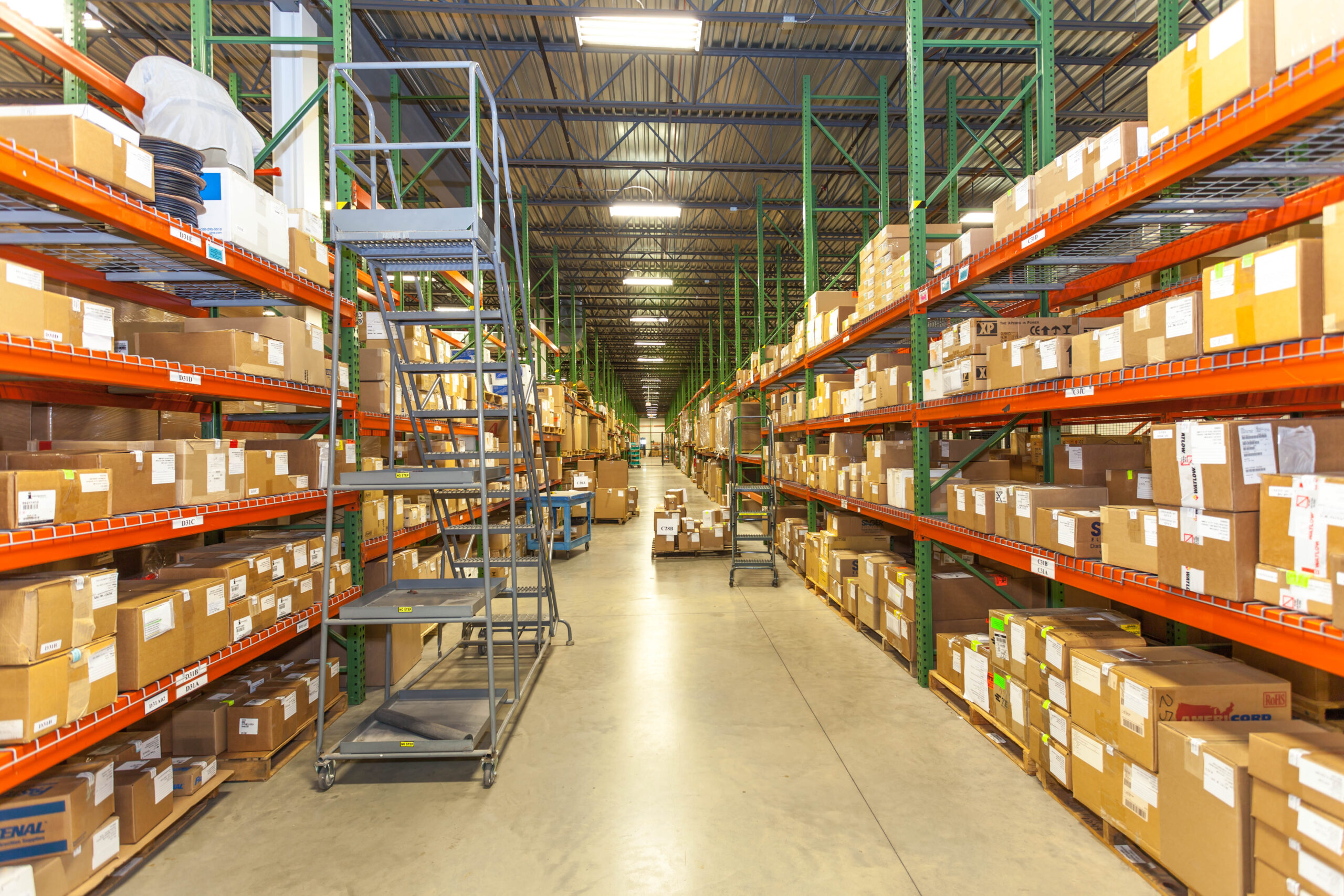
A large-scale, high-density warehouse aisle illustrates the physical foundation of Warehousing and Inventory Management. A strategic inventory system needs this organized infrastructure to store, track, and manage every item precisely, ensuring data accuracy and supporting streamlined logistics.
What is the Difference Between Warehousing and Inventory Management?
To effectively manage production, it helps to understand the difference between these two closely related concepts.
- Warehouse Management focuses on the physical operations inside the four walls of the warehouse. This includes the staff, equipment, and processes for moving and storing goods through the five stages listed above.
- Inventory Management is the broader, strategic process of tracking, controlling, and forecasting all inventory, regardless of its location in the supply chain.
Data-driven inventory management is the strategy of having the right product, in the right place, at the right time to meet demand without incurring unnecessary costs. This is where 3PL warehouse inventory management services provide critical value.
They use data to prevent expired or damaged stock, reduce carrying costs, and enable smarter purchasing decisions. This

The Importance of Physical Warehousing for the Product Lifecycle
Before you can manage inventory, you need the right warehouse. Strategic warehousing, especially when partnering with a contract manufacturer in the USA, helps in optimizing the flow of goods from the moment they arrive to when they leave. This involves maintaining a well-designed system where engineered layout, processes, and logistics lead to maximum speed and accuracy.
An optimized physical space is the first step in building a high-performance supply chain and effective warehousing and inventory management. Properly managing your materials and logistics helps make sure components are protected, stored correctly, and ready for the next step in production.
What are the Five Core Stages of the Warehousing Process?
Smooth logistics depends on having a well-defined process. To understand how warehousing and inventory management function on the ground, it helps to look at the five core stages every product moves through:
- Receiving: Inspecting and logging incoming goods from suppliers. This is the first and most critical point of quality and accuracy control.
- Put-away: Moving received goods from the dock to their assigned, optimized storage location. A proper put-away process keeps items easy to find later.
- Storage: Holding inventory securely and in an organized manner. This can involve simple shelving or complex, climate-controlled environments with optimized slotting.
- Picking: Retrieving the correct items from storage to fulfill a customer order. The accuracy of this stage directly impacts customer satisfaction.
- Shipping: Packing, checking, and dispatching the order to the customer. This final step includes managing documentation and carrier relations..
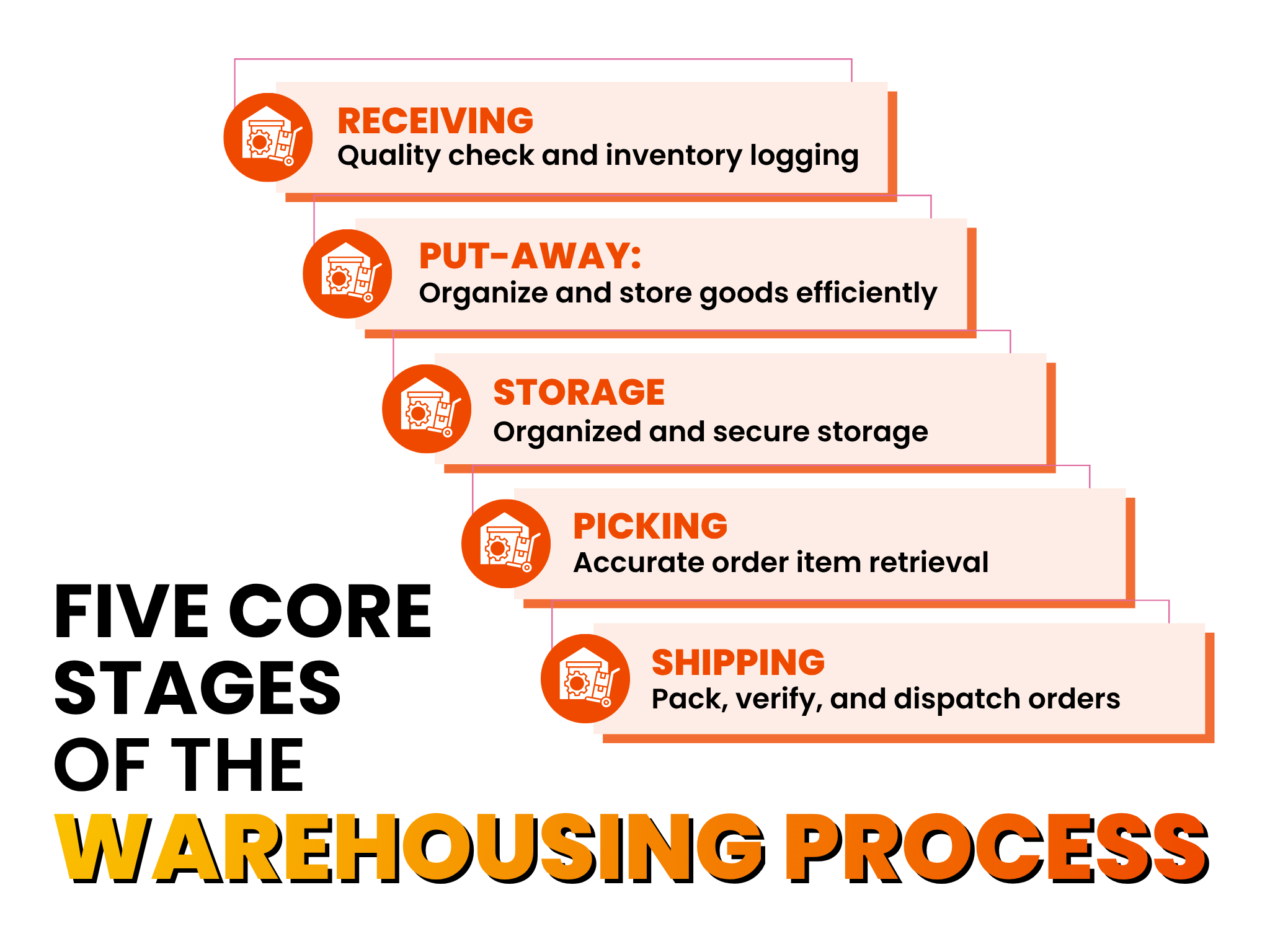
Understanding these steps inside the warehouse highlights the benefits of contract manufacturing, where all of these processes are under one roof. However, they represent only half of the equation. The other half is the data that informs these actions
How to Connect Inventory to Warehouse Management
The primary tool that connects the physical and data sides of warehousing and inventory management is the Warehouse Management System (WMS). When choosing the right technology, it helps to know the three main types of warehouse management systems:
- Standalone WMS: A dedicated system focused purely on warehouse operations.
- Cloud-Based WMS: A flexible, scalable SaaS solution that can be accessed from anywhere.
- Integrated ERP Module: A WMS that is part of a larger Enterprise Resource Planning system, connecting logistics to finance and sales.
While selecting and implementing a WMS can be a massive in-house project, partnering with a 3PL provider or box build electronic contract manufacturer allows you to leverage their established, proven systems without the upfront investment.
A Unified System to Drive Success
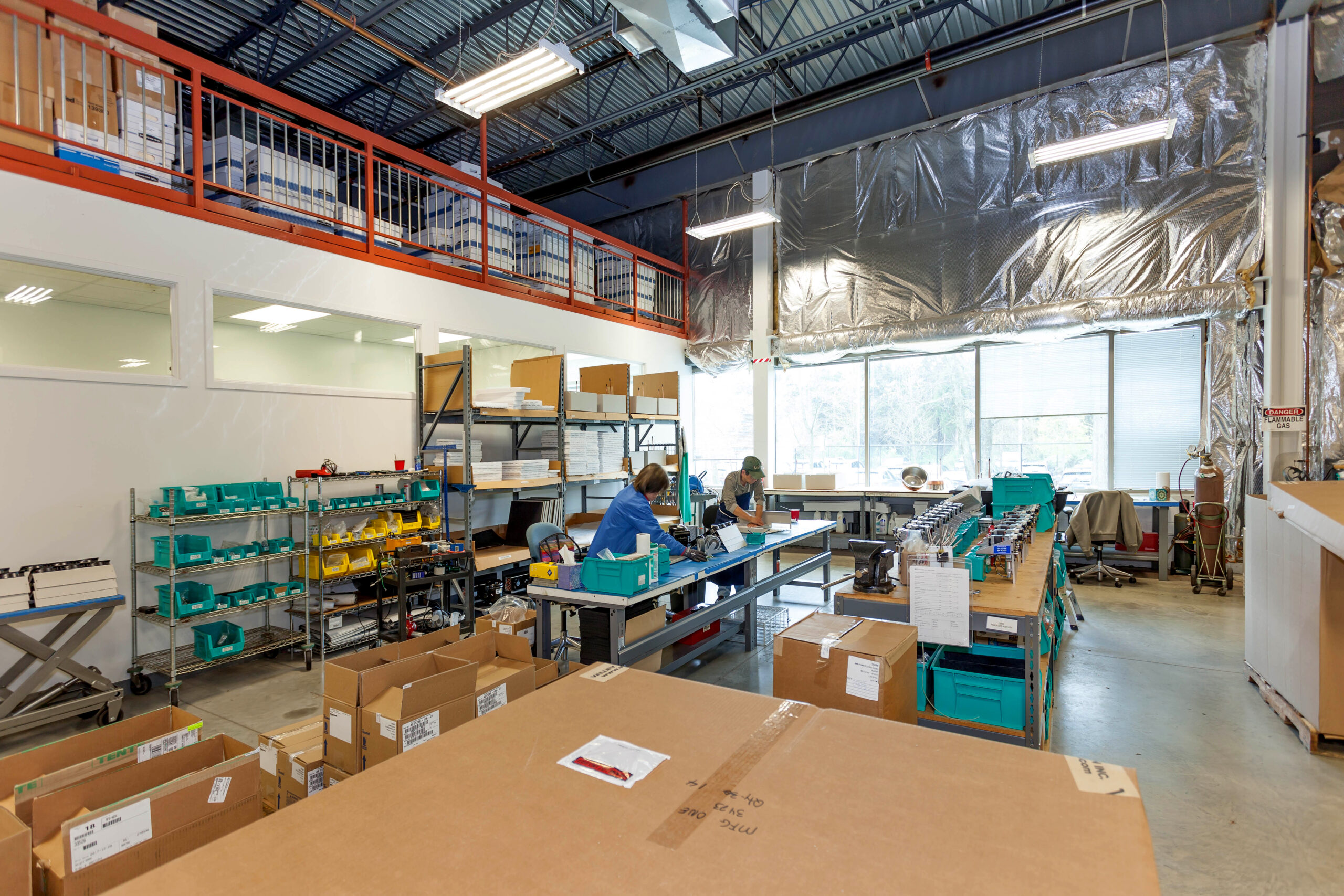
Workers performing organized kitting and assembly, which are a key part of an advanced warehousing and inventory management system. Components are accurately picked from inventory, kitted, and brought to production lines, demonstrating how seamless inventory control leads to efficient and accurate order fulfillment.
Effective warehousing and inventory management isn’t about having a great warehouse or great inventory data. It’s about the connection created when they work together in real-time. A unified system, like that provided by 3PL warehouse services, makes sure that every physical action on the warehouse floor, including scanning, picking, and shipment, instantly updates the inventory data.
This connection truly drives success for an OEM. The benefits include:
- Reduced Errors and Costs: Real-time data sync prevents picking errors, shipping mistakes, and costly write-offs from “lost” inventory.
- Improved Fulfillment Speed: When the system knows exactly where every item is, pick-and-pack operations become dramatically faster, a hallmark of effective 3PL fulfillment services.
- Better Demand Forecasting: Accurate, real-time data on inventory turnover allows for smarter purchasing, preventing both overstocking and expired stock.
- Increased Visibility: All stakeholders, from procurement to sales, can see the same accurate inventory levels, supporting more informed company-wide decisions.
The True Value of an Integrated Warehouse and Inventory System
This connected process allows for advanced fulfillment strategies and provides complete visibility for product lifecycle support. When your logistics partner knows your product’s specifications, they can manage aftermarket needs, returns, and end-of-life components more effectively. It’s the seamless integration of warehouse inventory services and strategic oversight that defines modern warehousing and inventory management.
Your Partner for Integrated Logistics
Ultimately, optimizing your supply chain comes from synchronizing the physical operations of warehousing with the digital strategy of inventory management. MFG One offers a full-service, turnkey approach that eliminates guesswork, reduces errors, and creates a powerful engine for growth. As a leading electronic contract manufacturer, we provide the integrated systems needed to achieve a unified manufacturing workflow.
Contact us today to learn how we can support your logistics needs across the US, Canada, UK, Mexico and beyond.