Table of Contents
The Power of Vendor Managed Inventory to Eliminate Stockouts
In manufacturing, a stockout reduces revenue. For OEMs, the traditional model of manually ordering parts is slow, reactive, and prone to error.
A missing 10-cent washer can halt a million-dollar production line. This vulnerability forces procurement managers to stockpile unnecessary inventory, tying up cash flow that could be invested in innovation or market expansion.
The solution to this problem is vendor managed inventory (VMI), where the responsibility of replenishment gets shifted to the supplier. It confirms that critical components are always available without tying up excess capital.
This article explores how VMI transforms supply chains from reactive to proactive.

Real-time data integration allows for point-of-use delivery, where suppliers replenish inventory directly on the line to eliminate internal handling and manual tracking errors.
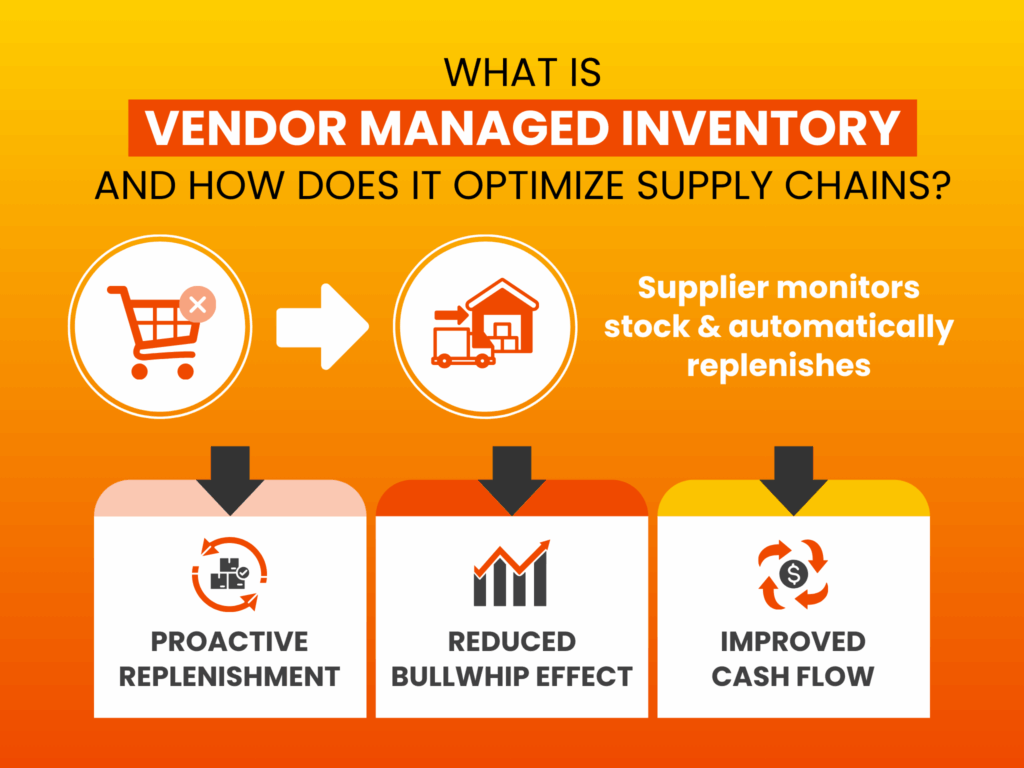
What is Vendor Managed Inventory and How Does it Optimize Supply Chains?
Vendor managed inventory or VMI is a collaborative model where the supplier, not the buyer, monitors stock levels. The supplier replenishes inventory automatically based on agreed-upon data. This fundamental shift optimizes operations in three distinct ways:
- Proactive Replenishment: Instead of waiting for a purchase order, the supplier tracks consumption data and restocks before levels hit zero. This seamless data exchange creates a “glass pipeline” where supply gaps are visible immediately, replacing the vague metrics of traditional periodic cycle counting.
- Reduced Bullwhip Effect: By giving suppliers direct visibility into demand, VMI smooths out order fluctuations, stabilizing supply chain management services.
- Improved Cash Flow: OEMs often only pay for parts when they are pulled for production, rather than holding months of paid-for stock. By aligning incentives, VMI removes the friction of transactional purchasing. It allows your internal teams to focus on strategic sourcing rather than clerical reordering.
How Do You Implement a Successful Vendor Managed Inventory System?
Implementing a vendor managed inventory system typically follows a three-step process to confirm data accuracy and accountability.
Step 1: Data Integration
It’s first important to establish a real-time data link between the OEM’s Enterprise Resource Planning (ERP) and the supplier’s system. Connecting these warehouse inventory services allows for accurate tracking of consumption rates and inventory positioning. Without this shared digital record, the system relies on manual inputs that reintroduce human error and defeat the purpose of automation.
Step 2: Defining Clear Metrics
Both parties must agree on minimum and maximum levels, lead times, and ownership transfer points. This clarity maintains accountability in materials and logistics flows, preventing disputes over stock responsibilities.
Step 3: Selecting Proven Partners
Implementing VMI works best with a strategic partner, like a contract manufacturing firm that has the expertise and established quality programs to support your production. Transactional commodity sellers often lack the infrastructure for deep integration.
Can VMI Work for Non-retail, Custom Manufacturing Environments?
Yes, vendor managed inventory can work in complex, non-retail manufacturing environments where part availability dictates production schedules. It provides key benefits such as:
- VMI effectively supports high-mix, low-volume environments. It makes sure that specialized, long-lead-time components for box build custom manufacturing services are always on hand.
- Suppliers can execute point-of-use delivery. They restock bins directly on the assembly line, which eliminates the need for internal warehouse handling and reduces labor costs.
- Consigned inventory models reduce financial risk. For expensive parts, suppliers can hold stock at the OEM’s facility, reducing the manufacturer’s inventory liability until assembly begins.
This application of VMI transforms the warehouse from a storage cost center into a dynamic flow-through facility.

How Does Vendor Managed Inventory Improve Product Fulfillment and Lifecycle Support?
Vendor managed inventory extends beyond raw materials. It benefits the finished product by streamlining the path to the customer and supporting long-term maintenance.
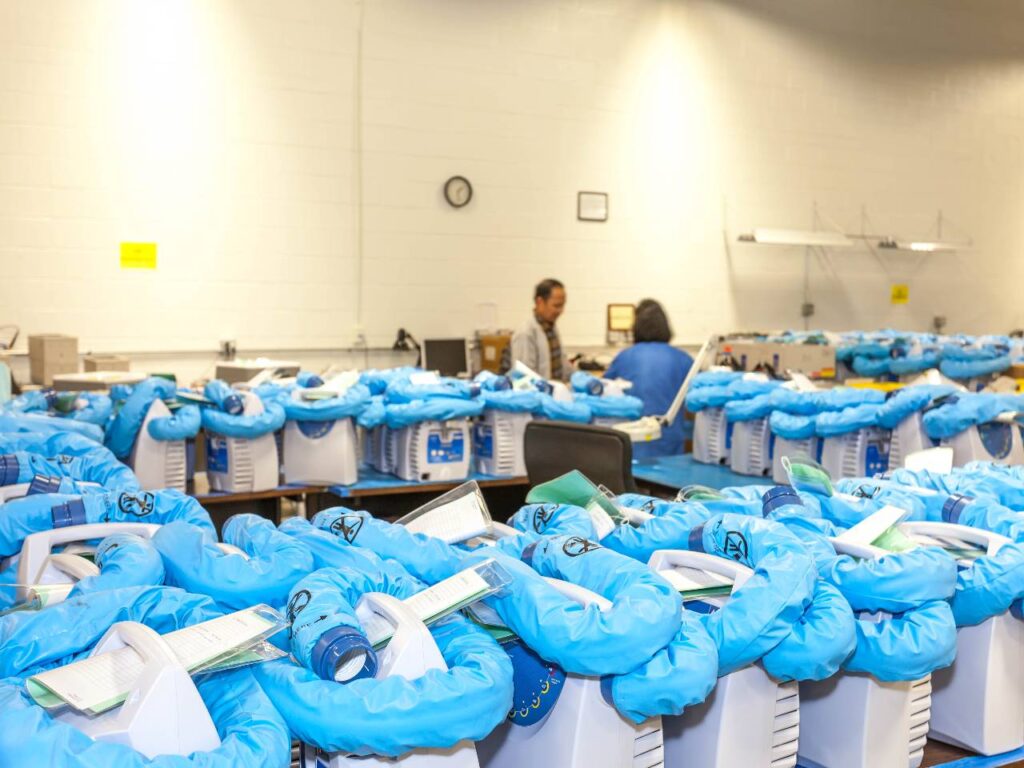
With guaranteed component availability, production lead times drop, resulting in faster fulfillment services and a reliable supply of finished products and components.
Faster Fulfillment
With guaranteed component availability through VMI, production lead times drop significantly. This consistency allows for faster electronic product fulfillment services to end customers, improving satisfaction and turnover rates.
When you remove the uncertainty of raw material availability, you can commit to aggressive delivery schedules with confidence, knowing your supply chain will not be the bottleneck.
Aftermarket Support
VMI programs can manage spare parts inventory. This supports rapid product fulfillment services for repairs and maintenance, keeping field assets operational.
Lifecycle Visibility
Continuous data sharing helps suppliers anticipate risks. They can flag end-of-life (EOL) components early, supporting long-term product lifecycle support and preventing obsolescence crises.
Partnering with a dedicated provider transforms your supply chain from a fragile series of transactions into a resilient, integrated ecosystem capable of weathering market volatility.
From Inventory Liability to Strategic Asset
Vendor managed inventory turns the burden of stock management into a competitive advantage. By leveraging the expertise and systems of a manufacturing partner, OEMs can eliminate stockouts, reduce costs, and focus on development.
Ultimately, a robust inventory system has become a cornerstone of modern manufacturing support services. It replaces guesswork with data and reactivity with reliability.
MFG One is an ISO 13485 contract manufacturer with specialized teams that provide end-to-end support for clients across the United States, Canada, the United Kingdom, Mexico, and beyond. Contact us today to explore our supply chain solutions and optimize your inventory strategy.