Table of Contents
How Supplier Managed Inventory Prevents Product Stockouts Without Overbuying
Balancing stock levels can be a challenge for OEMs and brands trying to scale their product. Carrying excessive stock keeps valuable capital idle, while carrying too little may stall the active production line.
Learn how supplier managed inventory addresses this challenge by shifting the reordering process to the facility building your product, helping keep production and supply moving without interruption.
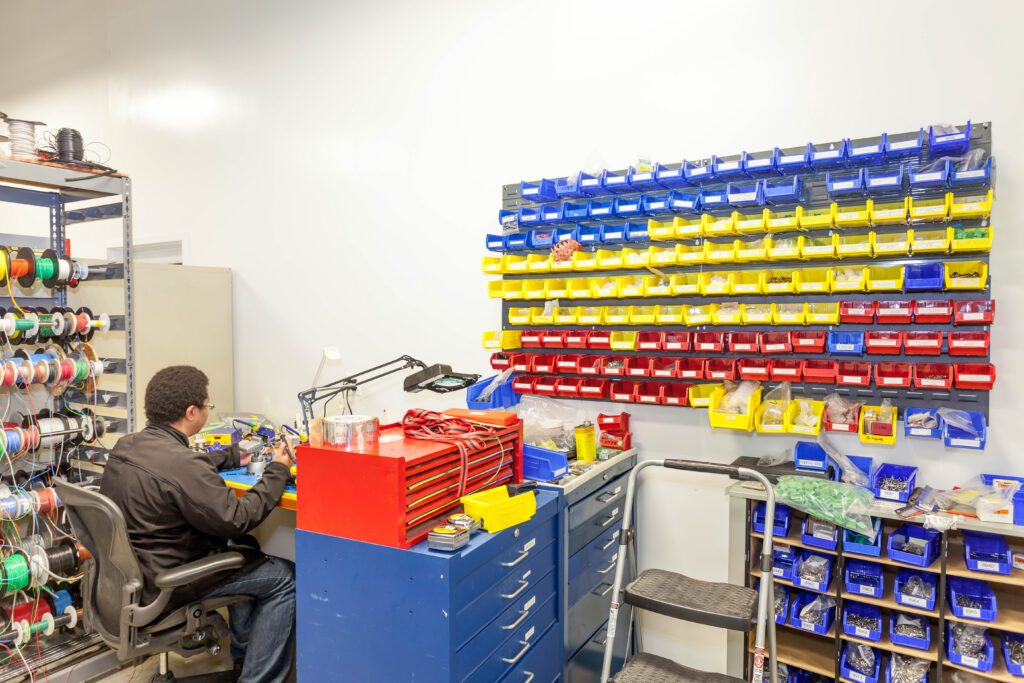
An engineer accesses organized component bins directly at his active workstation. Tracking and replenishing these specific parts through supplier managed inventory helps prevent project delays on the active assembly line.
What is a Supplier Managed Inventory?
Supplier managed inventory (SMI) is an inventory system that shifts the responsibility for tracking and replenishing component stock directly to the production partner (supplier), who manages it automatically based on real-time usage data.
Tight control over materials and logistics means the facility monitors exactly what parts leave the shelf and orders replacements when needed. This direct oversight helps reduce the risk of factory downtime and keeps your finished goods flowing to the market consistently.
Building a Transparent and Responsive Supply Chain
A successful inventory flow places importance on digital integration and product supervision. Using advanced supply chain management services allows the facility to keep track of your stock levels and requests for shipments only when parts become lower than the assigned threshold. In this way, your team doesn’t have to manually track missing components.
This supplier managed inventory system creates several advantages for your daily operations:
- Procurement teams align the flow of raw components with your specific daily production schedules.
- Removing constant purchase order generation from the process reduces administrative overhead and potential manual tracking errors.
- EMS contract manufacturing keeps critical electronic components available for assembly without prompting the OEM to manage safety stock directly.
How to Prevent Paying for Inventory You Don't Need Yet
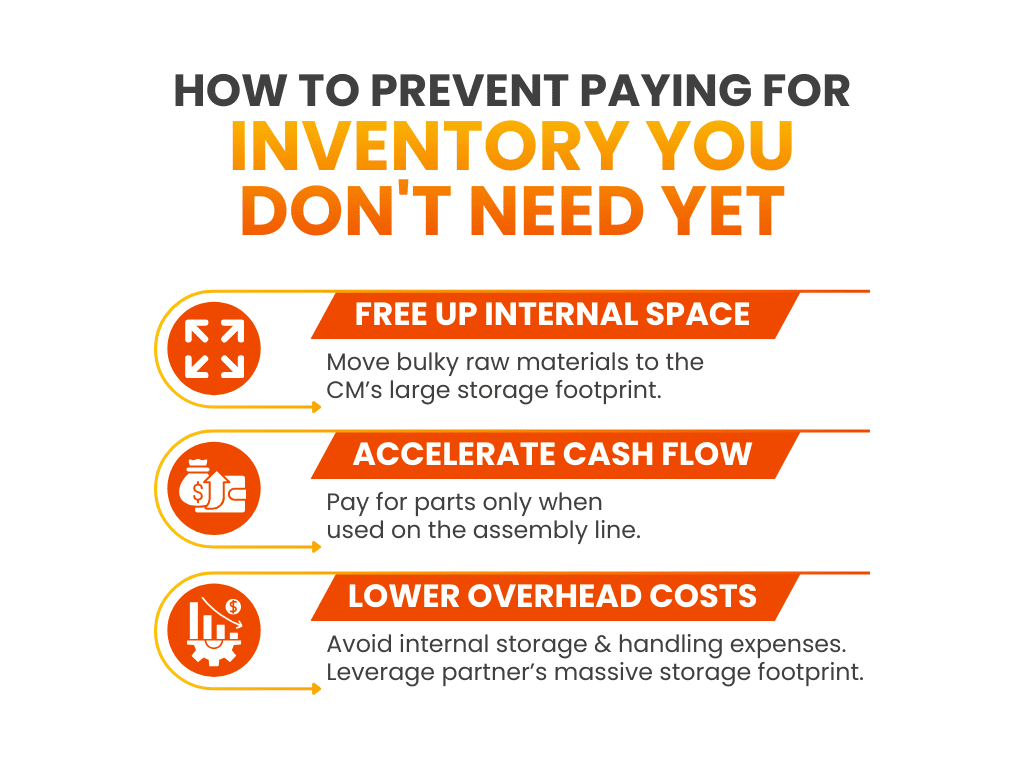
Not tying up your budget in extra parts may be one of the best financial benefits of this inventory model. Teaming up with a box build contract manufacturing partner that handles warehousing and logistics services means you only pay for parts when a technician actually uses them on the assembly line.
This strategy prevents you from paying upfront for thousands of components that may only end up on a shelf for months:
- Using electronic fulfillment services frees up valuable warehouse floor space for finished goods rather than bulky raw materials.
- Increasing stock turnover facilitates how fast capital flows through the entire company by heavily reducing unused inventory.
- Partnering with a manufacturing facility that manages storage space can reduce internal overhead.
The Advantage of Integrating Storage with Assembly
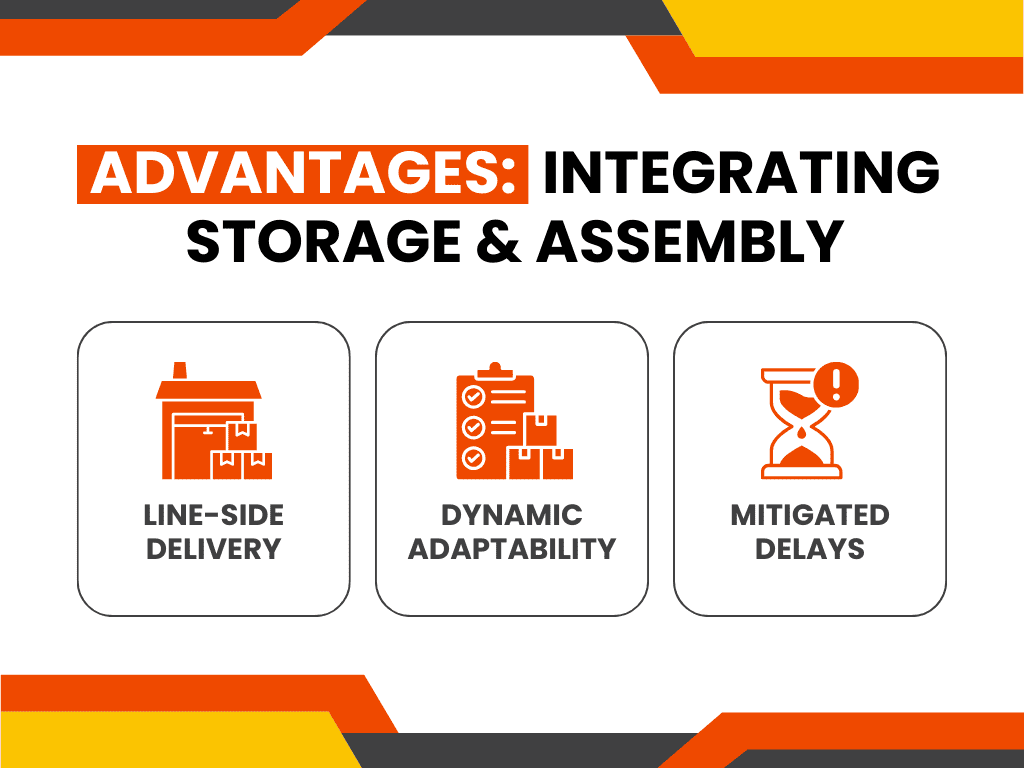
Supplier managed inventory works best when the vendor holding the parts actually builds the final product. As a premier box build electronic contract manufacturer, MFG One integrates inventory tracking directly into the active assembly line, offering operational benefits such as:
- Line-side delivery moves physical parts straight from the warehouse racks to the assembly station right when the technician needs them.
- Dedicated teams adjust stock levels dynamically based on unexpected design changes or custom build requests.
- Holding parts in-house minimizes the potential delays caused by waiting for critical components from non-vetted external vendors.
Maintaining Strict Traceability in Regulated Industries

Close up view of the assembly floor showing how inventory becomes a seamless extension of the production line. By integrating the supplier’s stock directly into the assembly workflow, you help reduce the friction of manual cycle counts and part-pulling.
Building highly regulated medical or industrial devices can turn inventory tracking into a quality control challenge. An ISO 13485 contract manufacturer applies strict supplier managed inventory protocols to closely manage lot numbers and expiration dates.
Additionally, detailed digital tracking prevents anyone on the manufacturing floor from accidentally using the wrong parts on your product. This careful oversight creates three major safety advantages for your final medical or industrial device:
- Strategic shelf routing makes workers grab older parts first so you never waste money throwing away expired materials.
- Digital scanners track every single piece of hardware from the receiving dock straight into the finished unit.
- Early warning systems spot discontinued parts long before a shortage affects your custom manufacturing and engineering projects.
This tight connection also means that box build printed circuit board assembly services are less likely to stop because of missing components.
Secure Your Supply Chain Today
MFG One implements supplier managed inventory systems near two major international airports to speed up all global physical shipments. Our facility proudly services clients nationally and internationally including the United States, Canada, the United Kingdom, Mexico, and beyond.
Contact us today to optimize your stock strategy and keep your production lines moving.
Supplier Managed Inventory FAQs
Review these common questions to better understand how supplier managed inventory agreements support your operations. Having these answers can help you choose a contract manufacturing company that can scale alongside your brand.
In a supplier managed inventory agreement, the contract manufacturing partner, such as MFG One, typically retains ownership of the raw materials. The ownership officially shifts to the OEM only when the parts are actively used on the production floor. This arrangement provides a financial benefit, as it supports the brand's cash flow by reducing the need to pay upfront for thousands of components.
The bullwhip effect happens when small shifts in customer demand cause significant over-ordering of raw materials further up the supply chain. Supplier managed inventory reduces this effect by using real-time consumption data to match material orders with actual production demand.
MFG One helps smoothen out these orders and saves the customer from potentially paying for material surpluses.
Vendor Managed Inventory (VMI) and Supplier Managed Inventory (SMI) typically refer to the same inventory management model. Both models involve a proven contract manufacturing partner, like MFG One, taking on the responsibility of automatically refilling your component stock to maintain a continuous supply. The goal of this shared approach is to provide complete product lifecycle support.
Supplier managed inventory protects custom built projects by letting your production partner automatically secure and store highly specific parts before needing them. Partnering with MFG One to handle this foresight helps keep your turnkey PCB assembly moving forward without sudden component shortages.