
Table of Contents
How Contract Manufacturing Inventory Management Improves Your Medical Device Profit Margins
Effective contract manufacturing inventory management helps drive quality and traceability for medical OEMs. This rigorous monitoring is necessary, as medical device manufacturers hold an average of 150 days of inventory, which means nearly 5 months of stock is continuously sitting on shelves or in transit.
When parts are tracked correctly under a controlled inventory system, you can avoid tying up resources in excess inventory. Balanced material tracking allows you to allocate funding on growth and quality alignment rather than storing boxes of unapproved components that might cause audit delays.
This guide discusses how medical electronic brands can leverage inventory and fulfillment services to increase final profits while maintaining quality standards.
Protecting Quality and Reducing Risks in Medical Material Storage
Storing raw components and specialized materials requires careful oversight. Too much inventory can increase the risk of expired parts, damaged materials, and gaps in traceability. Partnering with an FDA-registered medical device contract manufacturer for regulated warehouse inventory services helps keep materials organized, tracked, and managed under an ISO 13485 quality management system.
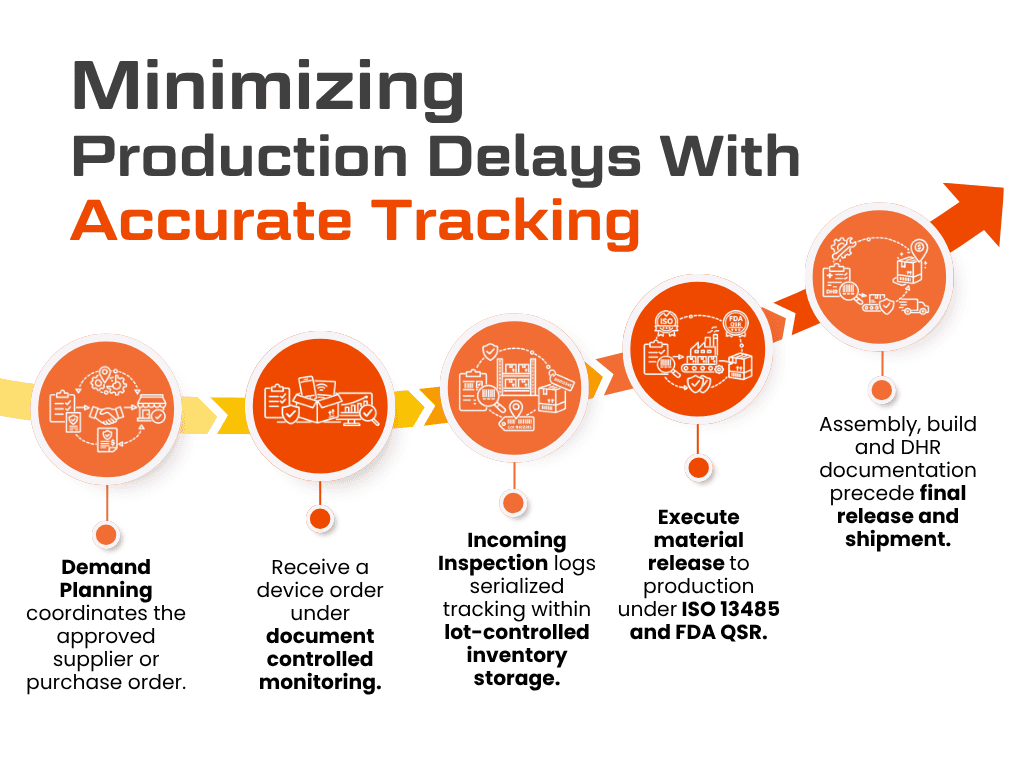
Minimizing Production Delays With Accurate Tracking
A single missing screw or resistor can disrupt the assembly line, creating risks for production continuity and traceability. Maintaining precise inventory visibility leads to consistent material availability, verifies that every assembly step adheres to rigorous quality standards and FDA Quality System Regulation (QSR) requirements, and prevents the inconsistencies often associated with unplanned, rushed procurement.
Contract medical device manufacturers use material verification to move a project safely from the initial order to the shipping dock. Experienced teams look for lot traceability and typically follow these verification steps:
- Receive a new device order from a client.
- Check lot-controlled inventory records to confirm all approved materials are present.
- Release parts to the assembly floor under strict supplier controls.
- Complete the build efficiently to minimize the risk of late deliveries and regulatory waste.
Following a structured contract manufacturing inventory management workflow keeps your delivery dates on track and your clients satisfied.
Preventing Financial Waste From Product Obsolescence
Parts can become outdated or unusable before you ever put them into a finished unit. Global data shows that medical electronics and technology production will grow at a compound annual growth rate (CAGR) of 5.94% by 2035. Rapid technological shifts push older component versions out of the market quickly, creating a high risk of material waste. Managing your resources with a box build electronic contract manufacturer specializing in medical equipment requires clear tracking inside a controlled inventory system:
- First In, First Out: Using materials in the order they are received to improve inventory rotation and maintain expiration control.
- Controlled Inventory Systems: Monitoring the exact lot traceability, age, and version of every electronic component.
- Waste Reduction: Reducing the risk of disposing of expired or unapproved materials through documented procedures.
Good warehouse inventory management helps you use the oldest stock first to prevent expensive write-offs.
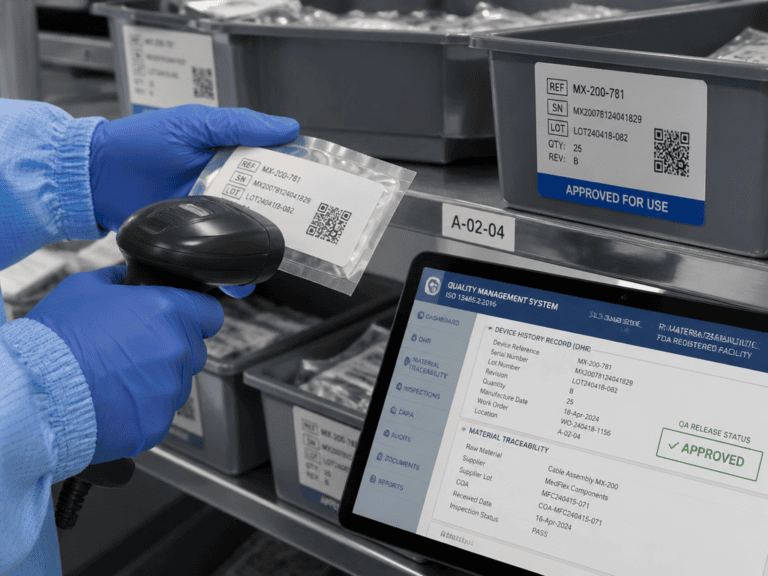
Organized workstations support medical device manufacturing inventory management by keeping approved materials clearly identified and accessible. This controlled environment helps maintain traceability and supports accurate material tracking throughout production.
Preventing Financial Waste From Product Obsolescence
Parts can become outdated or unusable before you ever put them into a finished unit. Global data shows that medical electronics and technology production will grow at a compound annual growth rate (CAGR) of 5.94% by 2035. Rapid technological shifts push older component versions out of the market quickly, creating a high risk of material waste. Managing your resources with a box build electronic contract manufacturer specializing in medical equipment requires clear tracking inside a controlled inventory system:
First In, First Out
Using materials in the order they are received to improve inventory rotation and maintain expiration control.
Controlled Inventory Systems
Monitoring the exact lot traceability, age, and version of every electronic component.
Waste Reduction
Reducing the risk of disposing of expired or unapproved materials through documented procedures.
Good warehouse inventory management helps you use the oldest stock first to prevent expensive write-offs.
Optimizing Long-Term Forecasts Using Real-Time Visibility
When you have a clearer view of your usage rates and proper medical device manufacturing support services, your management partner can buy materials for you in larger quantities at the right time to provide consistent material availability and maintain rigorous quality standards throughout your production cycles.
Securing better vendor terms and pricing models involves considering these proactive, data-driven factors:
Volume Planning
Aligning material procurement with production schedules to offer continuous supply, consistent quality, and manufacturing stability.
Demand Forecasting
Predicting when you will need a fresh shipment of certified raw materials.
Buffer Management
Keeping enough extra stock to handle a sudden surge in orders without overspending or breaking safety rules.
Reducing Internal Resource Demands By Outsourcing To A Medical Device Contract Manufacturing Partner
While the global market for manufacturing inventory management software is projected to reach $2.75 billion in 2026, investing in software is only one piece of the quality equation. Beyond software, maintaining an internal warehouse demands highly trained staff and rigorous, controlled procedures that are essential for supporting regulated production and compliance.
In medical manufacturing, outsourcing inventory and logistics to a contract manufacturing partner with a managed supplier network can help reduce internal overhead while supporting ISO 13485-aligned quality practices. Instead of building a separate warehousing team, OEMs can rely on a partner that already manages material verification, supplier controls, lot traceability, and Device History Record (DHR) documentation within the production workflow.
Gaining the benefits of a large-scale facility without the private investment provides these key advantages:
- Gain access to professional component tracking tools.
- Remove the need for an internal warehousing and logistics services team to manually count and sort daily deliveries.
- Focus your internal energy on design while the partner manages qualified supplier controls on the physical shelf.
- Speed up your shipping cycle with integrated DHR for documentation and traceability.
- Protect your finished units during transport with packaging and fulfillment services.
Partner With MFG One For Strategic Resource Allocation
Effective inventory management helps medical device manufacturers maintain traceability, support production schedules, and keep materials moving efficiently throughout the supply chain. Working within an ISO 13485 quality management system provides greater visibility into materials, documentation, and production readiness.
As a contract manufacturer in the USA, MFG One provides warehousing, fulfillment, assembly, and manufacturing inventory management services for regulated medical devices.
From material verification and lot traceability to Device History Record (DHR) documentation and global distribution, we help medical device companies maintain inventory control while supporting ISO 13485 quality standards, FDA QSR requirements, and production readiness across the US, Canada, the United Kingdom, Mexico, and beyond.
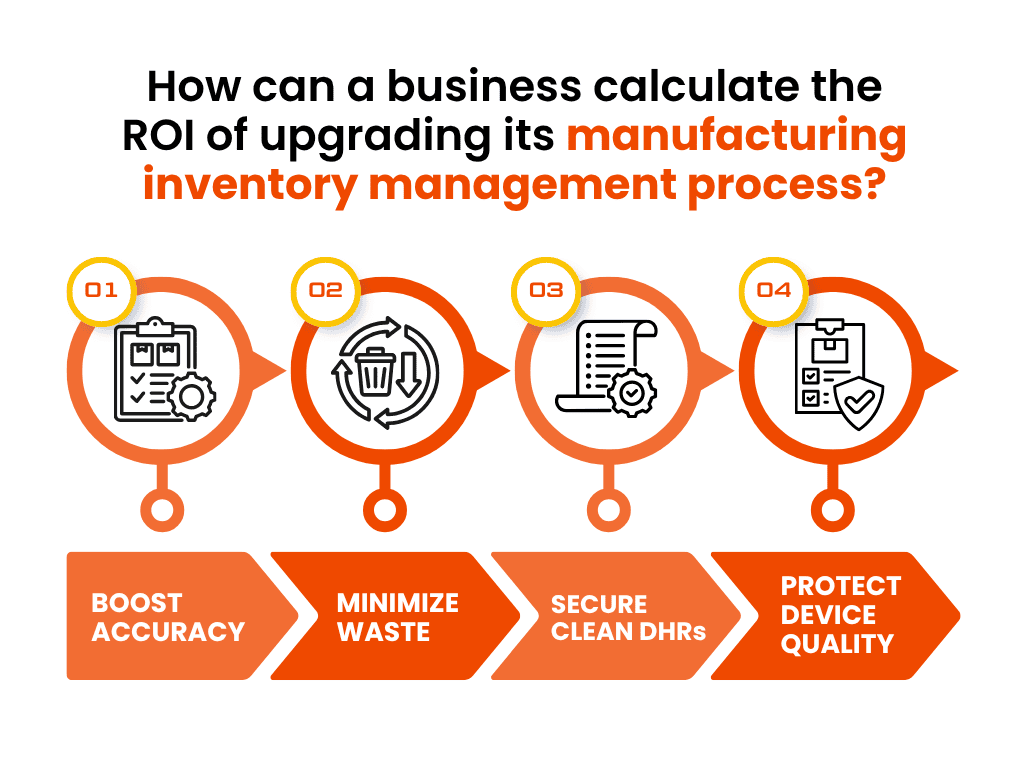
Answering Your Questions About Contract Manufacturing Inventory Management
Managing parts under a documented quality system keeps your medical build safe and traceable. The answers below explain how our inventory processes support your financial goals and your regulatory needs.
Manufacturing inventory management supports traceability for ISO 13485 or FDA audits by showing how each material moves from an approved supplier into the finished device. At MFG One, this process connects qualified supplier records, incoming inspection, and controlled inventory activity to the Device History Record (DHR). This gives OEMs a clearer record of where each component came from and how it was used during the build.
A business can calculate ROI by comparing system expenses against gains in inventory accuracy, labor efficiency, and material use. In regulated manufacturing, such as medical manufacturing, the value also comes from stronger inspection controls and cleaner DHRs, not just warehouse savings. MFG One supports this through custom manufacturing services with organized inventory control and material verification that help maintain product quality while reducing unnecessary waste.
A partner-managed stock program plays a role in manufacturing inventory management by letting your box build electronic contract manufacturing partner handle the counting and ordering of your components. This method removes the burden on your internal team while ensuring you have enough parts for your build. MFG One tracks these levels to help your production line stay active while you avoid overspending on shelf space.
A structured inventory system prevents quality escapes by making sure that only approved, lot-controlled components are released to the production line. By eliminating the manual handling of unverified parts and maintaining real-time visibility into supplier certifications, manufacturers like MFG One significantly reduce the risk of using incorrect or expired components, thereby upholding ISO 13485 standards and maintaining audit readiness.