Table of Contents
What are the Main Advantages of Contract Manufacturing?
Contract manufacturing services provide a compliant quality system for medical OEMs to grow without the additional resources of running their own production facility. Outsourcing your production lets you allocate resources to research while your medical device contract manufacturing partner manages ISO 13485 quality processes, document controlled files, and strict FDA QSR alignment.
Scaling without building a dedicated site helps OEMs stay flexible, which explains why more than 64% of medical OEMs in the US outsource portions of their assembly work.
In this guide, you’ll learn the advantages of contract manufacturing and how they can help your medical business scale efficiently with a detailed device record history supporting consistency under FDA QSR guidelines prior to final quality assurance release.
Protecting Quality and Reducing Risks in Medical Material Storage
The global medical device contract manufacturing market is projected to reach $214.3 billion in 2033, reflecting an industry shift toward highly specialized production environments. Aligning with an ISO 13485-certified contract medical device manufacturer provides immediate access to structured quality systems that conform to strict FDA QSR expectations.
The transition to a partnership-driven quality model highlights three operational advantages of contract manufacturing:
Validated Infrastructure Support
Access dedicated production floors featuring continuous temperature loops and humidity-controlled zones inside a documented controlled environment.
Advanced Equipment Readiness
Use specialized testing and assembly equipment managed under strict maintenance frameworks without expanding internal facility overhead. Rigorous incoming inspection protocols populate the secure device record history.
Experienced Technical Personnel
Direct assembly through trained lineside technicians who follow documented quality procedures aligned with ISO 13485 standards. Staff apply a strict supplier qualification process and approved records to confirm component lot traceability.

Access a Highly Specialized Manufacturing Production Team
Another advantage of contract manufacturing is outsourcing to teams that bring years of experience in specialized areas like medical box build manufacturing. Certified organizations source high-quality components from approved vendors through a strict supplier qualification process.
Production delays and assembly challenges can be reduced through the support of experienced technicians who follow documented quality procedures, including:
- Process Engineers: Specialists who find the most efficient way to build your device and handle process validation.
- Quality Assurance Specialists: Professionals who verify that medical devices meet quality and safety requirements through inspection, testing, and documentation.
- Procurement Experts: Buyers who know how to manage parts traceability even during market fluctuations.
Key Phases of Outsourcing Your Medical Device Manufacturing
Established partners have the systems in place to launch custom manufacturing services when you work with them. Fast setup times allow you to reach healthcare markets sooner.
Onboarding is achieved through a structured three-phase design transfer that protects your Device History Records (DHR):
- Step 1: Transfer your design files and material lists to the production facility under strict design transfer controls.
- Step 2: Qualify production equipment through formal installation qualification (IQ) and operational qualification (OQ) process testing protocols.
- Step 3: Move into production after Performance Qualification (PQ) and final validation activities are completed and documented within the quality management system.
Partnering with a box build electronic contract manufacturer converts assembly into a repeatable process in a documented controlled environment to satisfy ISO 13485 and FDA QSR expectations prior to final quality assurance release.
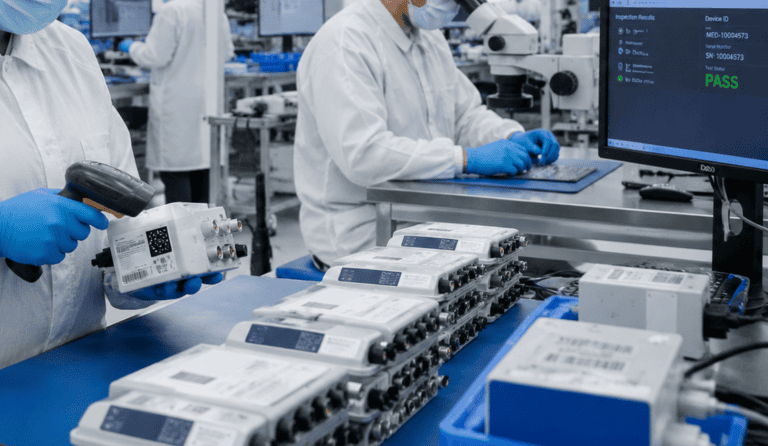
This ISO 13485-certified production environment highlights the advantages of contract manufacturing for medical devices. Device testing, barcode verification, and documented quality controls help maintain traceability and support regulatory requirements throughout production.
Scaling Your Output to Match Demand
Flexible production space means you won’t have to pay for an empty factory floor during slower months. You can adjust your order sizes based on real-time sales data rather than guesswork. This is particularly beneficial for the medical electronics sector, which accounts for nearly 40% of global medtech and EMS contract manufacturing volume.
Adapting a flexible infrastructure allows you to protect your margins through three primary scaling strategies:
- Handle Seasonal Peaks: Easily increase output for new medical tool rollouts or unexpected clinic demands.
- Manage Slow Periods: Reduce production volume to avoid excess inventory.
- Test New Markets: Build smaller batches of medical equipment to complete field evaluations before scaling production.
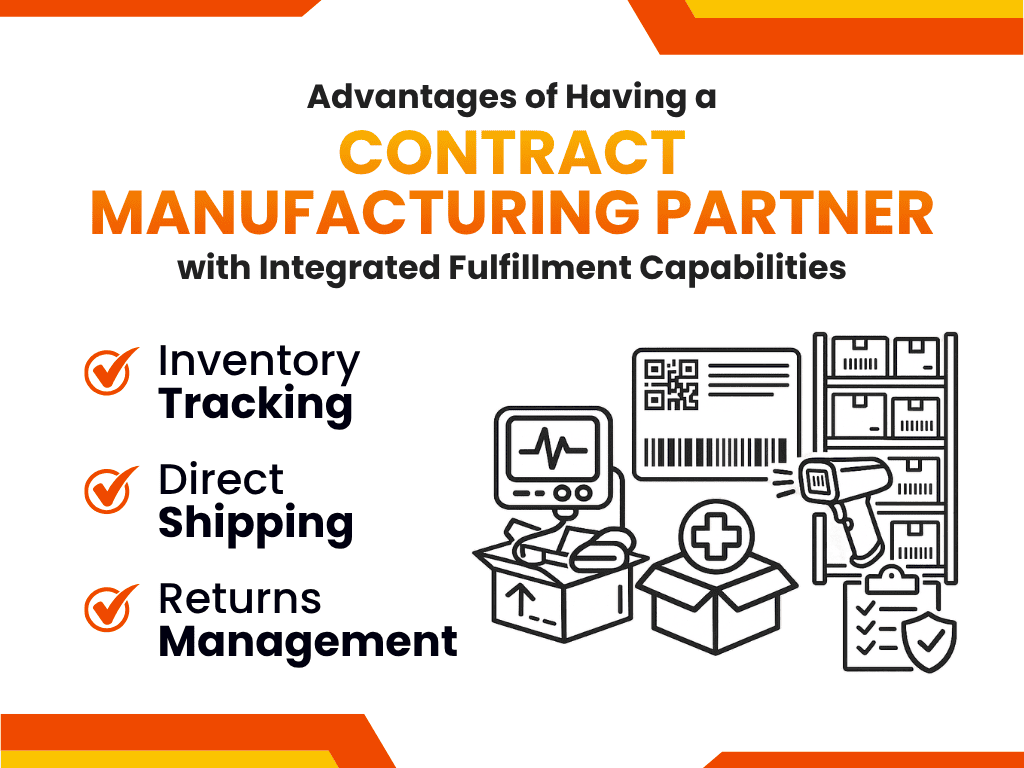
Advantages of Having a Contract Manufacturing Partner With Integrated Fulfillment Capabilities
Coordinating assembly and logistics under a unified quality system removes the extra step of transporting delicate medical electronic devices to an external warehouse. Moving finished units directly from the assembly area to a secure loading zone reduces material handling and transit risks.
A unified manufacturing support service allows your team to maintain traceability and control over the following logistical operations:
- Serialized Inventory Tracking: Trained personnel deploy serialized tracking to monitor complete lot traceability within a documented controlled setup.
- Controlled Fulfillment: Where required by product specifications, units transition from the assembly line into validated medical packaging configurations, with a complete device record history documented for tracing before shipment.
- Returns Management: The production team executes regulated reworks or software updates under approved quality system procedures to maintain compliant device record history documentation.
Centralizing these traceable release processes with a contract manufacturer in the USA minimizes the complexity of managing multiple compliance systems.
Scale Your Production With MFG One
Partnering with an ISO 13485 box build electronic contract manufacturer like MFG One would provide your brand with the many advantages contract manufacturing offers.
MFG One proudly services all over the world, including the US, Canada, the United Kingdom, Mexico and beyond.
Answering Your Questions About Contract Manufacturing Services
Contract manufacturing offers companies advantages by reducing risk and improving production speed. MFG One provides these answers to help you understand how our electronic contract manufacturing can streamline your medical device project.
Contract manufacturing reduces capital expenditure for electronic products by removing the need to buy expensive assembly machines and factory space. Partnering with MFG One allows your brand to avoid the high upfront costs of building a private production site. This shift can help keep your cash available for marketing and growth while MFG One manages your medical equipment’s manufacturing, sourcing, assembly, and labor needs.
Some of the scalability advantages of contract manufacturing are helping OEMs adjust production volumes without expanding internal facilities or adding permanent staff. Qualified manufacturing partners can scale production while maintaining the same documented procedures, inspection requirements, and traceability controls used during routine operations. This helps medical device companies respond to changing demand while maintaining consistent quality and regulatory compliance.
The advantages of a single-source turnkey contract manufacturing model include having one point of accountability from sourcing through final fulfillment. MFG One manages approved suppliers and oversees incoming inspection, inventory control, and final assembly within a coordinated quality system. This approach helps maintain consistent documentation and supports DHR requirements. It also simplifies communication throughout the product lifecycle.
Contract manufacturers support supply chain continuity through established supplier qualification programs and approved vendor relationships. When supply constraints occur, MFG One can evaluate alternative sourcing options through documented review processes while maintaining traceability and quality requirements. Combined with incoming inspection and material control procedures, this helps support production continuity without compromising regulatory expectations.