Table of Contents
What Goes Into Contract Manufacturing Costs?
North America continues to drive the manufacturing sector, holding a 31.90% market share in the last year as companies look for transparent and compliant production solutions.
For medical device OEMs, contract manufacturing costs include more than labor and materials. They also cover FDA QSR and ISO 13485-aligned quality systems, supplier controls, and traceability. Understanding these factors can help medical device OEMs evaluate manufacturing partners with established quality systems and plan for production costs.
This breakdown highlights the common costs and considerations involved in outsourcing medical device manufacturing.
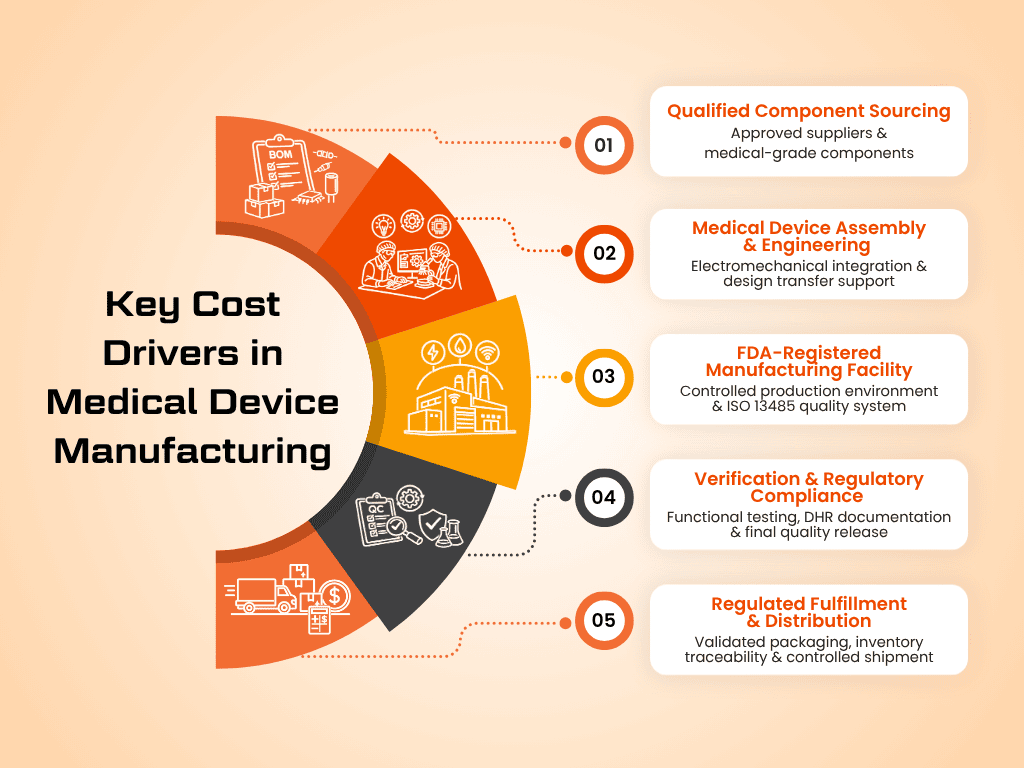
1. Sourcing the Physical Bill of Materials (BOM)
The cost of contract manufacturing parts can account for a significant portion of the production budget. For medical device OEMs, the goal is not only to source parts at an effective cost, but to source them through approved suppliers with documented quality controls.
The initial budget for a managed supplier network typically includes approved materials such as:
- Raw materials like resins, metals, and protective chemicals.
- Electronic components, including microchips, sensors, and printed circuit boards, are sourced through qualified supplier partners.
- Specific equipment parts such as screws, brackets, and gaskets.
2. Investing in Technical Skill and Specialized Labor
Specialized labor from a custom medical contract manufacturer provides the experience needed to assemble and document the product according to approved procedures. Complex work, such as electromechanical integration and final system assembly, can increase total labor hours and affect manufacturing costs.
Beyond the raw materials, the production budget should account for the technical work required to turn verified components into a finished medical device:
- Engineering Reviews: Checking that the design is ready for the assembly line under strict design transfer controls.
- Manual Assembly: Hands-on time for mechanical and electronic integration inside a controlled environment.
- Project Management: Coordinating timelines and qualified supplier partners.
3. Infrastructure Fees and Facility Overhead
Facility fees cover the infrastructure and tools needed to move your project into production. The general contract manufacturing costs remain relatively consistent but can vary depending on the type of equipment your build requires.
While labor and materials are variable, the fixed costs of maintaining a high-compliance production environment play a vital role in the final quote from your contract manufacturing partner:
- Assembly Line Configuration: The contract manufacturing team conducts incoming inspections and prepares the workstations and specialized electronic assembly for your specific medical build.
- Controlled Manufacturing Environment: Environmental controls, monitoring systems, and facility infrastructure help protect sensitive components while supporting ISO quality requirements.
- Quality Systems: Quality processes, traceability controls, and documentation systems help support FDA QSR requirements and ISO 13485-regulated medical device production.
4. Quality Control and Regulatory Expenses
Testing prevents faulty units from reaching your customers and protects your brand’s reputation. An ISO 13485-certified contract manufacturer following strict regulatory guidelines adds a layer of safety that is especially important for medical equipment.
- Functional Testing – Running the device through a series of power-on checks and verification protocols.
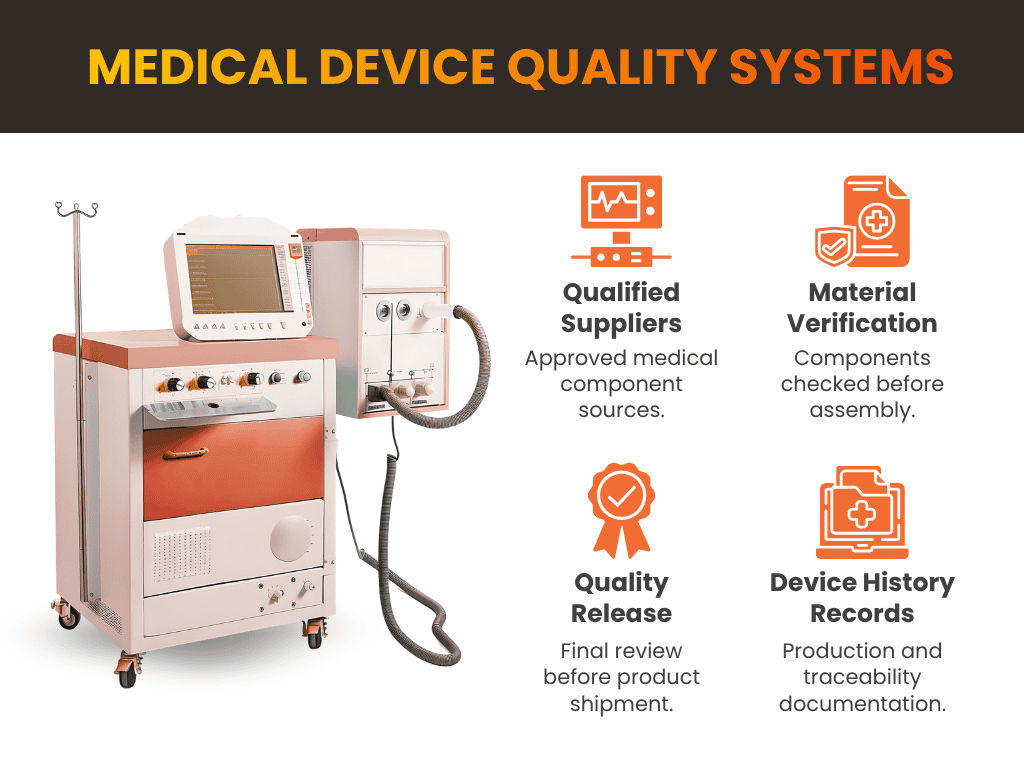
- Device History Records (DHRs) – Maintaining production and traceability records that document how each device was manufactured.
- Inspection Rounds – Manual and automated visual checks under documented quality records to maintain compliance.
5. Logistics and Distribution Fees
Shipping, storage, and medical device fulfillment services are another important part of contract manufacturing costs. For medical devices, these costs often include validated packaging, inventory storage, shipment tracking, and traceability requirements that support regulated distribution.
Once the product is built and verified, finished goods move through controlled storage and distribution processes.
- Custom validated packaging designs, especially from a medical device manufacturer, can help protect and keep your units safe during long-distance transit.
- Inventory storage fees are part of the overall cost of inventory management. Carrying costs can account for 15-30% of a business’s total inventory value and may include warehousing, product handling, and serialized shipment tracking requirements.
- Quality assurance teams execute controlled release processes by verifying the complete device record history and serialized tracking data within the quality management system prior to final distribution.
Strategic Resource Management Through Technical Partnership
A knowledgeable contract box build manufacturing partner acts as an extension of your team, helping identify efficiencies early in the design transfer process to avoid expensive production errors.
By partnering with an established US medical device contract manufacturer like MFG One, with 25+ years of regulatory experience, original equipment manufacturers can effectively scale their output, maintain strict compliance, and bring high-quality products to market with clearer quality oversight and a transparent contract manufacturing quotation.
Gain Better Control Over Your Contract Manufacturing Project
As a box-build electronic contract manufacturer, MFG One provides medical device OEMs with greater visibility into the manufacturing process, from qualified supplier management and component sourcing to assembly, verification, and fulfillment. Our FDA-registered, ISO 13485-certified quality management system supports consistent production and documented quality throughout your project.
We proudly work with OEMs across the US, Canada, United Kingdom, Mexico and beyond.
Answering Your Questions About Contract Manufacturing Costs
Contract manufacturing costs include more than labor and materials. Quality systems, regulatory requirements, inventory management, and logistics all contribute to the final cost of production. The answers below explain some of the most common factors that influence pricing for medical device manufacturing and other regulated industries.
OEMs should account for costs tied to compliance documentation, incoming inspection, supplier qualification, packaging validation, and traceability. These activities support FDA QSR and ISO 13485-aligned production, but they may be overlooked when teams focus only on materials and labor. MFG One helps identify these requirements earlier so the budget aligns with the stages of contract manufacturing.
Transparent material management provides itemized tracking for component procurement and material routing under a documented controlled setup. A clear operational structure allows OEMs to verify precisely how raw components move through ISO 13485-aligned quality management systems. MFG One provides transparent vetting of qualified suppliers to support strict data integrity prior to final quality assurance release.
Global material shortages are driving cost fluctuations in contract manufacturing by making raw materials and chips more expensive and harder to find. These shifts usually happen when supply is low, forcing a contract manufacturer in the USA to find new sources or buy ahead. This coordination helps reduce supply disruptions and supports production schedules when market conditions change.
Increasing production volume can lower the cost per unit by spreading fixed expenses, such as line setup, tooling, testing, and documentation, across a larger run. Higher volumes may also support better material planning through approved supplier channels. MFG One’s new product introduction services help medical OEMs move from pilot builds to larger production runs while maintaining quality-system requirements, documentation and traceability.